UPSC Sociology Optional Syllabus 2026-27: Complete Guide with Preparation Strategy
If you have chosen Sociology as your optional subject in UPSC and want a clear direction for your preparation, this guide is for you. Many UPSC aspirants choose sociology as an optional because it is known to be a high scoring optional subject in UPSC, with several candidates securing ranks under 10 in recent years.
This guide explains the Sociology optional syllabus for UPSC 2026 in a simple and practical manner. You will get to know how to prepare Sociology optional for UPSC 2026 effectively, and also the ‘UPSC preparation strategies’ shared by experienced professors who have helped aspirants to achieve top 10 ranks in UPSC in the last few years.
What is included in the Sociology Optional Syllabus UPSC IAS 2026?
The Sociology optional syllabus for UPSC IAS 2026 is clearly defined and well structured. It is divided into two papers that focus on core sociological theories and Indian society, helping aspirants build a strong conceptual and applied understanding.
Sociology Optional Syllabus Structure:
Paper I: Fundamentals of Sociology: – Covers basic concepts, sociological thinkers, research methods, and theories that help build analytical thinking and answer writing depth.
Paper II: Indian Society: –Focuses on social structure, social change, issues like caste, religion, gender, and challenges specific to Indian society.
- Thinkers and Perspectives: – Includes contributions of major sociologists whose ideas are frequently used to enrich answers and score better marks.
- Application in Current Context: – Encourages linking sociological concepts with current social issues, policies, and real-life examples in answers.
Sociology Optional Exam Pattern for UPSC CSE 2026
The sociology optional exam pattern for UPSC Civil Services exam follows a well-balanced structure that tests conceptual understanding and application. Knowing how the papers are framed, how marks are distributed, and how time is allotted helps aspirants prepare with better planning to avoid confusion later.
- Number of Papers: Two separate papers
- Total Marks: 500 marks combined
- Marks per Paper: 250 marks each
- Exam Duration: 3 hours for each paper
- Nature of Questions: Descriptive and opinion-based
- Language Choice: Answers can be written in English or Hindi.
Sociology Optional Paper 1 Syllabus – Fundamentals of Sociology (Explained Simply)
Sociology Optional Paper 1 syllabus for UPSC 2026 focuses on the theoretical foundation of the subject. It introduces core concepts, thinkers, and perspectives that help aspirants understand society in a structured way and write analytical answers in the UPSC Mains exam.
Paper 1 Syllabus in Brief:
Sociology Optional Paper 2 Syllabus – Indian Society (Explained Simply)
Sociology Optional Paper 2 syllabus for UPSC CSE 2026 applies sociological ideas to the Indian context. It helps aspirants understand social realities of India and use real-life examples, thinkers, and current issues to enrich answers in the UPSC Mains exam.
Paper 2 Syllabus in Brief:
What is the Real Difference Between Sociology Optional Paper 1 and Paper 2?
Many UPSC aspirants with Sociology as an optional ask this early in their preparation. Understanding the difference between sociology paper 1 and paper 2 helps you study smarter and score better. Both papers carry equal marks but test different skills.
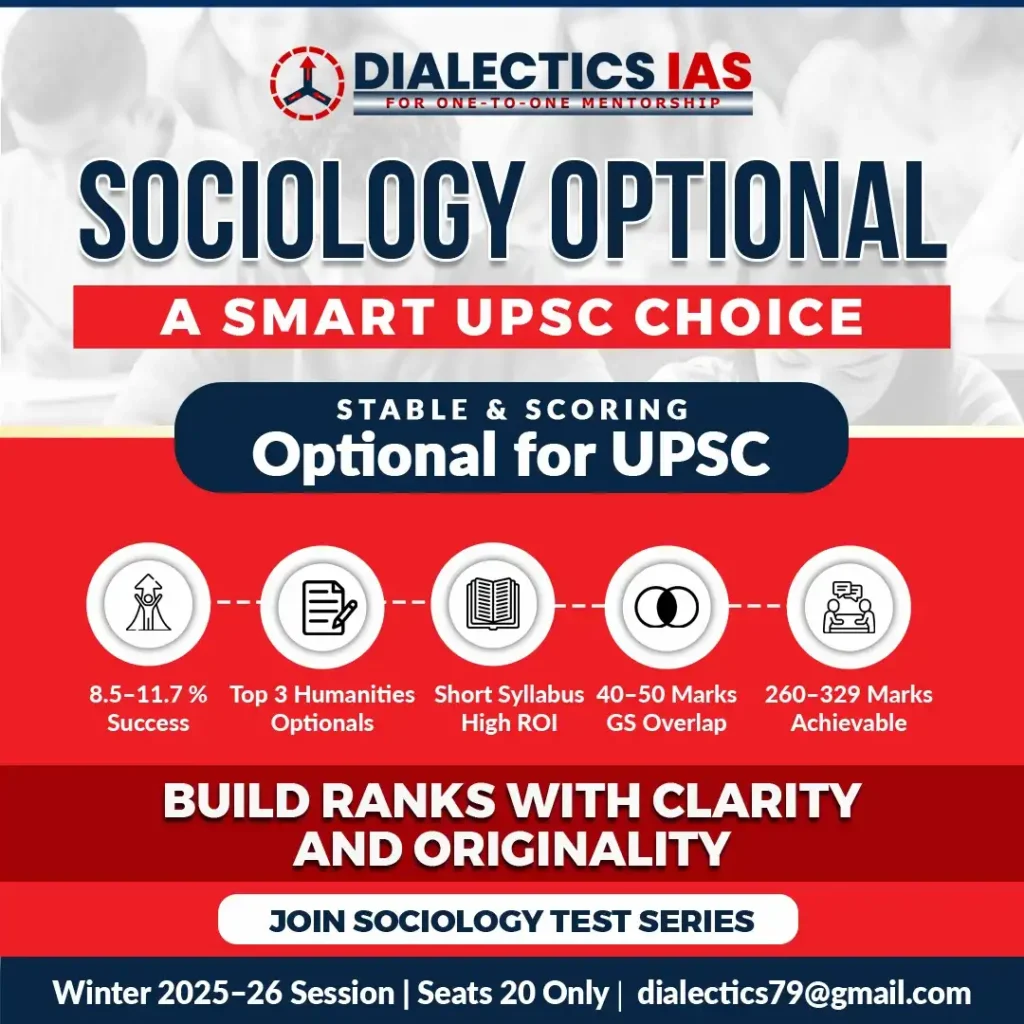
An added advantage of choosing sociology optional is its strong overlap with General Studies. On average, 40–50 marks worth of content overlaps with GS Paper I, GS Paper II, and the Essay paper.
Paper 1 vs Paper 2 at a Glance
- Nature of Content: Paper 1 focuses on theory and concepts. Paper 2 focuses on applying those ideas to Indian society.
- Type of Sociology: Paper 1 is mainly based on Western sociology and thinkers. Paper 2 deals with Indian sociology and Indian social realities.
- Concept Level: Paper 1 includes abstract ideas like social action, power, and bureaucracy. Paper 2 uses concrete examples like caste, gender issues, rural change, and social movements.
- Use of Examples: Paper 1 answers rely more on thinkers and definitions. Paper 2 answers use data, case studies, committees, and current examples from India.
- Marks Weightage: Both Paper 1 and Paper 2 carry 250 marks each, making a total of 500 marks for sociology optional.
How to Study for Sociology Optional Paper 1 and Paper 2 Differently?
Paper 1 and Paper 2 demand different study approaches even though they are closely connected. While one builds your theoretical foundation, the other tests how well you apply those ideas to Indian society. Understanding this difference helps improve answer quality and overall scores.
Which Is Easier: Paper 1 or Paper 2 of Sociology Optional?
Most aspirants find Paper 1 easier to start with because the syllabus for sociology optional papar 1 is compact and fixed. Paper 2 becomes easier once you learn how to apply concepts and add real examples.
The Integration Approach That Works to Score Higher in Sociology Optional 2026
High scorers use an integration approach. They link Paper 1 thinkers with Paper 2 answers. For example, using Weber or Marx while explaining caste or class in India. This approach improves answer quality and often helps in achieving higher marks.
Submit Your Details for Free Counselling
Why Understanding the Sociology Optional Syllabus is More Important Than Collecting Notes?
Many UPSC aspirants begin their preparation by collecting sociology optional notes for UPSC from multiple sources. What truly improves scores is strong syllabus understanding. The “Sociology optional syllabus” defines the exact boundaries of preparation and guides every study decision.
The consistent performance of sociology over the years proves this approach. Despite changes in question style, sociology’s success rate has remained stable between 8.5% and 11.7%, rewarding aspirants who focus on syllabus driven preparation.
Why Syllabus Analysis Comes First
- Nearly 80–85% UPSC questions are directly traceable to syllabus keywords
- Each line of the syllabus reflects recurring question themes
- Topic overlap across years is seen in 2 out of every 3 questions
How Toppers Follow a Syllabus-First Strategy
- Most sociology toppers revise the syllabus at least 5–6 times during preparation
- Rank holders often map 10–15 years of previous questions with syllabus topics
- High scorers focus on limited sources and repeated revision
The Problem of Material Overload
- Aspirants collect content from 5–7 sources for the same topic
- More material reduces revision cycles, which impacts answer quality
- Extra notes rarely translate into higher marks
Building Your Own Understanding
- Studying with the syllabus improves concept clarity and recall
- Short self-made notes are revised 3 times more than bulky material
- Understanding concepts improves answer structure and flow
Coverage vs Comprehension
- Coverage is about finishing books
- Comprehension is about answering questions
- Sociology rewards clarity, application, and relevance over volume
How to Study Sociology Optional Syllabus from Scratch: Comprehensive Preparation Guide for UPSC IAS 2026
Starting sociology optional preparation from scratch can feel overwhelming, but a structured approach makes it smooth. With the right order of study, focused sources, and guidance from experienced professors, aspirants can build strong concepts and score consistently in UPSC 2026.
Start With the Syllabus: – Read the complete sociology optional syllabus line by line and understand every term. Keep it as your constant guide so your preparation stays aligned with what UPSC actually asks.
Build Core Concepts First: – Begin with basic sociological concepts and theories. Strong fundamentals make advanced topics easier and help you write clear and structured answers in the exam.
Understand Thinkers Deeply: – Study sociological thinkers with context, not memorisation. Focus on ideas, relevance, and application so you can naturally use thinkers across different questions.
Practice Answer Writing Early: – Start answer writing once basics are covered. Regular feedback from professors helps improve structure, content relevance, and sociological depth in answers.
Integrate Paper One and Two: – Link theoretical concepts with Indian society topics. This integrated approach reflects mature understanding and is commonly seen in high scoring sociology answers.
Follow a Dedicated Test Series: – A structured test series ensures disciplined answer writing and continuous improvement. The UPSC Sociology optional test series by Dialectics IAS is designed to provide detailed feedback by Professors.
Join Focused Mentorship Program: – Personalised academic support helps aspirants stay on the right track. The Sociology Optional Mentorship Program by Dialectics IAS offers one to one guidance for concept clarity and strategic preparation.
How Much Time is Required to Complete the Sociology Optional Syllabus?
The time required to complete the Sociology optional syllabus depends on your starting level. With a structured plan and regular revision, aspirants can finish the syllabus efficiently without rushing or overstretching the preparation.
Realistic Timelines for Sociology Optional Preparation:
Starting From Scratch: – Aspirants beginning from zero usually take 8–12 months to complete the syllabus with proper understanding, answer writing, and revision.
With Basic Background: – Those who already have some idea of sociology can complete the syllabus in around 6 months with focused study and consistent practice.
Repeaters: – Those who have already attempted the Sociology optional UPSC paper earlier can revise and consolidate the syllabus in 3 months with intensive answer writing.
Daily Study Hour Recommendations:
- Full-Time Aspirants: 3–4 focused hours daily for sociology
- Working Professionals: 8–10 hours on weekends and 1–1.5 hours on weekdays
Phase-Wise Time Allocation
- Concept Building: 40% of total time
- Answer Writing Practice: 30% of total time
- Revision and Integration: 30% of total time
A well-paced timeline helps maintain clarity, improves retention, and leads to better performance in the UPSC Mains exam.
Conclusion
Sociology remains one of the most rewarding optionals in UPSC when prepared with clarity and structure. Understanding the syllabus, integrating Paper 1 and Paper 2, and following a focused approach guided by experienced professors makes a real difference. With consistent revision and mentorship from platforms like Dialectics IAS, you can make the journey much easier.
Frequently Asked Questions (FAQ) – Dialectics IAS Sociology Optional Syllabus